
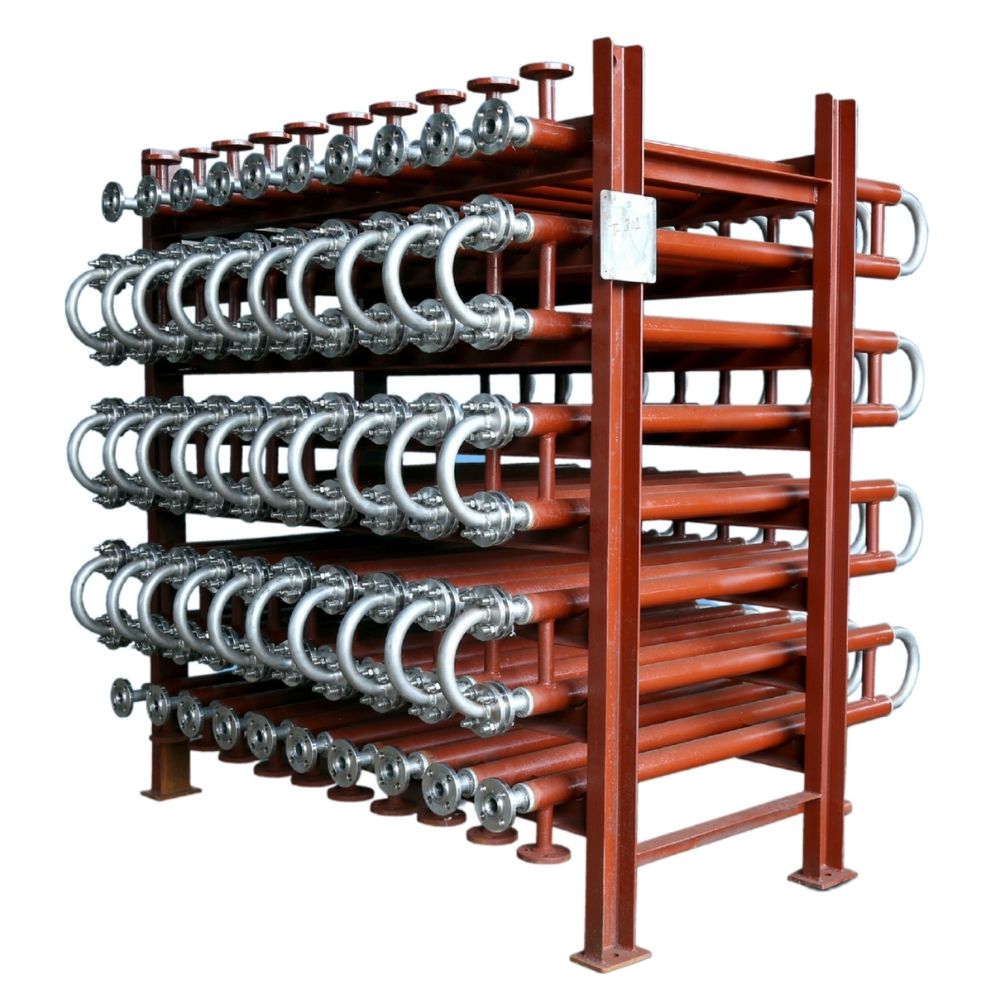
Hydrodynamic Flow Reactor (HFR) Overview
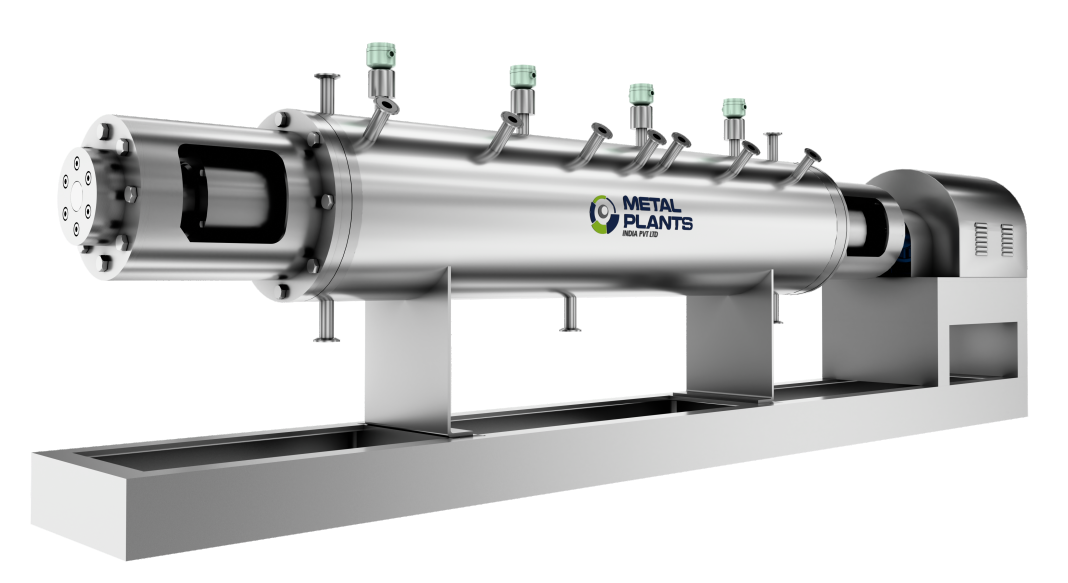
A Hydrodynamic Flow Reactor (HFR) is a continuous tubular reactor characterized by periodic “pinched” or narrowed sections along its length, arranged in either straight or coiled configurations. These geometric variations are intentionally designed to modify fluid behavior as the process stream moves through the reactor. As fluids pass through the alternating narrow and wider zones, they undergo repeated acceleration, deceleration, and changes in flow direction. This creates regions of high and low shear, along with converging and diverging flow patterns, which significantly improve internal mixing and heat transfer without the use of static mixers or mechanical agitation.
Due to these hydrodynamic advantages, HFRs are especially effective for exothermic reactions, rapid mixing processes, and multiphase systems where uniform temperature and concentration profiles are critical. The enhanced mass transfer and improved residence time distribution help minimize hot spots and ensure consistent reaction performance. Additionally, the simple tubular design makes the reactor highly scalable, cost-effective, and well suited for continuous operation. As a result, Hydrodynamic Flow Reactors are widely used in chemical synthesis, extraction processes, and inline multiphase reactions where efficient mixing and thermal control are essential.
Design
A tubular reactor periodically “pinched” (narrowed) at intervals along its length, either straight or coiled.
Operation
Pinched segments create alternating zones of high and low shear, converging/diverging flow, and internal changes in flow direction. This enhances mixing and heat transfer drastically.
Advantages
Excellent for exothermic, multiphase, or rapid mixing reactions without the need for static mixers; scalable and economical for continuous operations; improves mass transfer and residence time distribution.
Applications
Used in chemical synthesis, extraction, and multiphase reactions were enhanced inline mixing and heat transfer are critical.
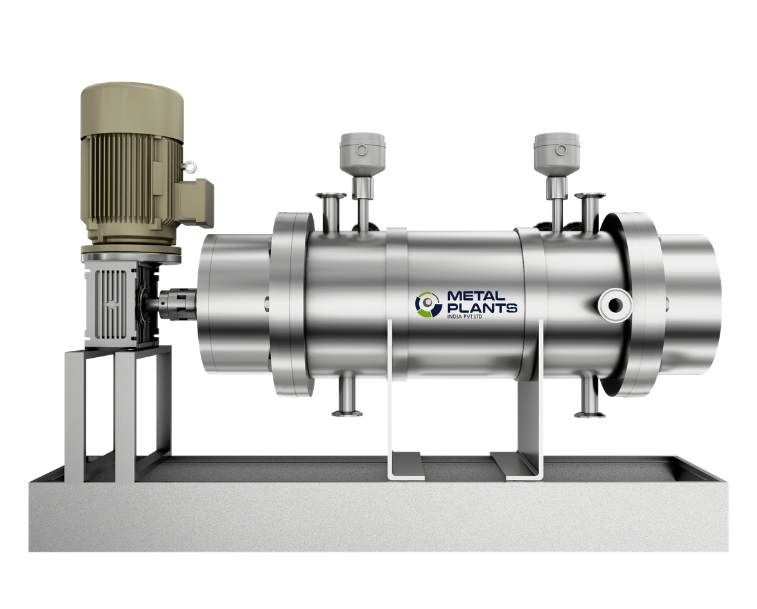
Plug Flow Reactor (PFR) Overview
In operation, each fluid plug retains its identity and experiences the same residence time, allowing for predictable reaction kinetics and efficient use of reactor volume. This makes Plug Flow Reactors highly effective for fast, single-phase reactions where high conversion is required within a compact footprint. Their ability to maintain clear reaction zones is particularly valuable for processes that depend on controlled reaction progression. Due to these advantages, PFRs are widely used in gas-phase and liquid-phase chemical production, polymerization processes, and large-scale industrial reactions where consistent product quality and high throughput are essential.
Design
Along, straight tubular reactor (sometimes coiled), with reactants flowing in one direction with little back-mixing.
Operation
The fluid elements (“plugs”) move along the reactor with a uniform velocity, maintaining their identity; concentration and temperature gradients exist along the reactor’s length, but no mixing in axial direction.
Advantages
High conversion per unit volume; suitable for fast single-phase reactions.
Applications
Widely used for gas-phase or liquid-phase chemical production, polymerization, and reactions requiring clear separation of reaction zones.
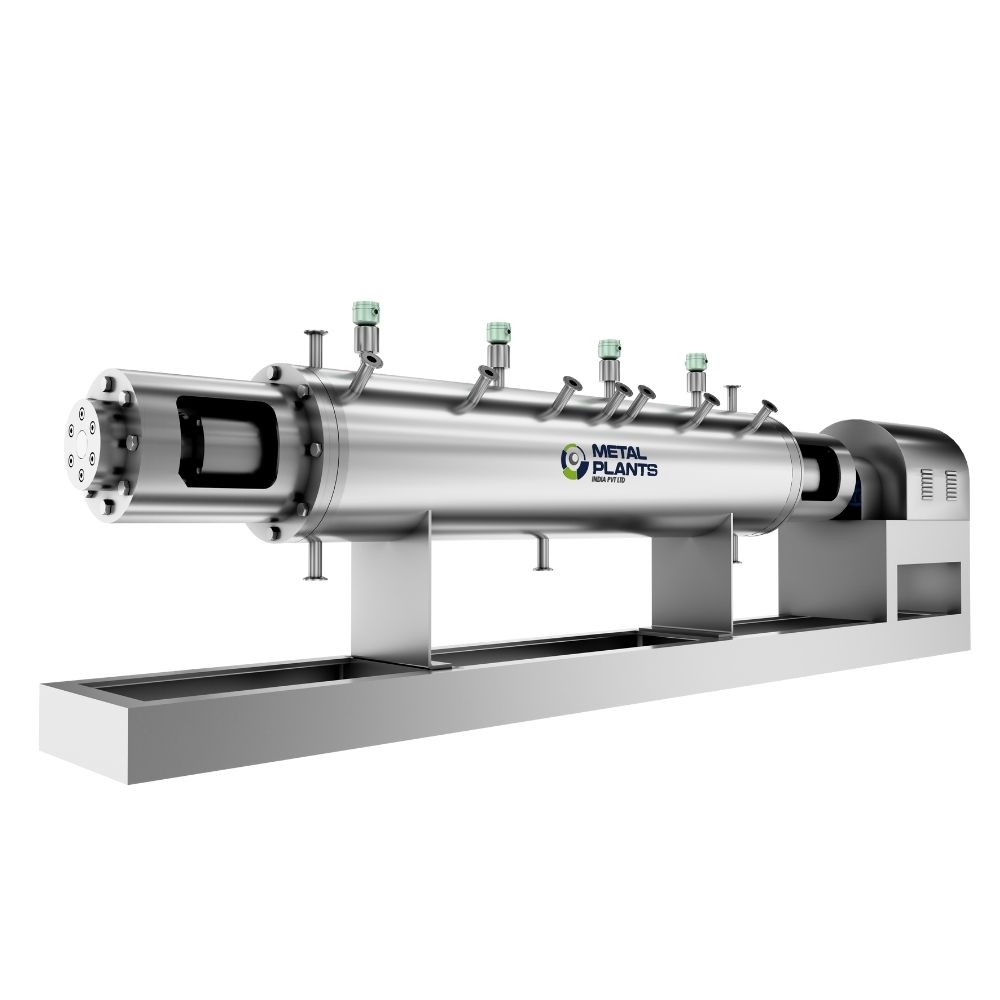
Thin Film Reactor (TFR) Overview
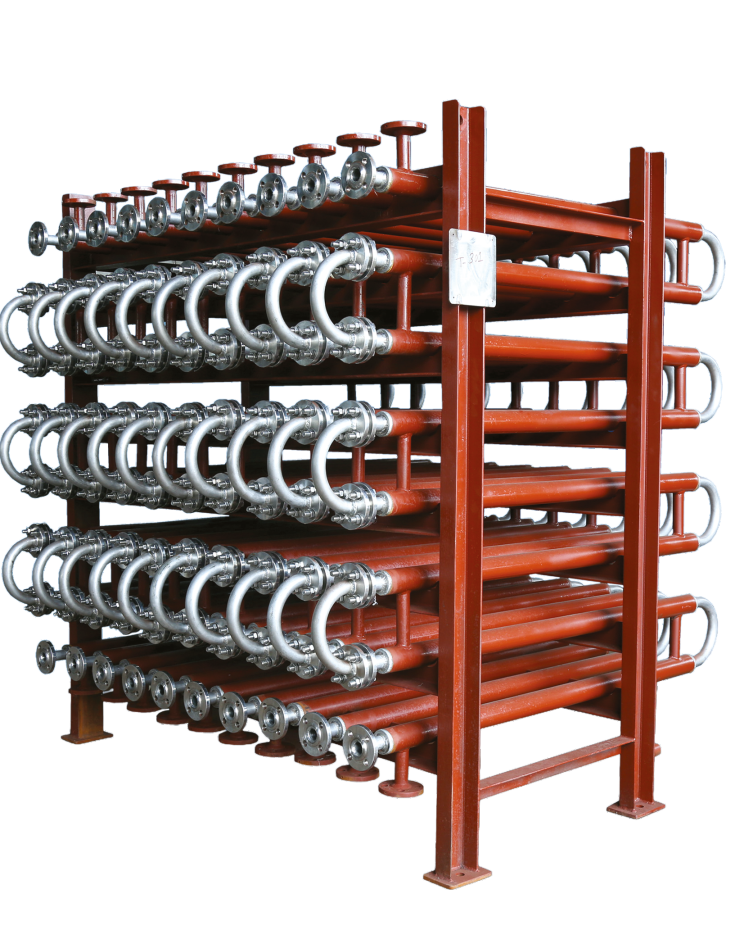
A Thin Film Reactor (TFR) is designed around the principle of spreading reactants as a very thin layer over a flat or rotating surface. This spreading is commonly achieved through mechanical wiping, agitation, or centrifugal force, ensuring the material forms a uniform film across the reactor surface. By maintaining such a small film thickness, the reactor dramatically increases the available surface area relative to volume, which is critical for efficient heat and mass transfer. This design is especially valuable when precise thermal control is required or when working with materials that are difficult to process in conventional reactors.
During operation, the thin film enables extremely rapid mixing and fast heat exchange due to the short diffusion distances within the film. This makes Thin Film Reactors particularly suitable for highly viscous, heat-sensitive, or fast-reacting systems, where overheating or degradation must be avoided. Operators can easily control residence time and film thickness, allowing fine tuning of reaction conditions. As a result, TFRs are widely used in polymerization processes, vacuum distillation, biochemical reactions, and other applications where rapid product removal and efficient heat management are essential for process stability and product quality.
Design
Consists of a flat or rotating surface on which reactants spread in a thin film, often aided by mechanical movement or centrifugal force.
Operation
The thin film maximizes surface area for heat and mass transfer, and provides extremely rapid mixing due to low film thickness.
Advantages
Efficient for highly viscous or heat-sensitive materials; allows easy control over film thickness and residence time; excellent for fast reactions.
Applications
Used in polymerization, vacuum distillation, biochemical reactions, and processes where the rapid removal of products or efficient heat management is needed.
Flow Reactors Overview
Flow reactors employ continuous flow technology to execute chemical reactions continuously. Reagents are continuously added to a flow reactor vessel inlet whilst product is constantly collected at the reactor outlet, to create a continuously flowing stream of reactants and outputs.
A continuous flow reactor embodies the principles of flow chemistry. Flow reactors are designed to operate at a continuous steady state, which means the internal stream, temperature, reagent feed and flow rates are all constant, to produce an unceasing flow of chemical reactant material which generates a continuous product output.
The flow reactor administers the integration of two or more reactive compounds, which are then mixed and flowed through a highly controlled stream to generate a continuous reaction.

Flow reactions take place in tubular system, whether it be a capillary or micro-structured device made from a non-reactive material. Coiled tubing is commonly added within the design to aid both mixing and heat transfer. Temperature control is then maximized by adding heat or coolant transfer fluid.
While the core principle behind all flow reactors remains the same-santered on a continuous flow mechanism-the choice among various types depends entirely on the specific application.
Here is a comparative overview of the Hydrodynamic Flow Reactor (HF Reactor), Plug Flow Reactor, and Thin Film Reactor, outlining their operation principles and suitable applications.
Flow Reactor Comparative Overview
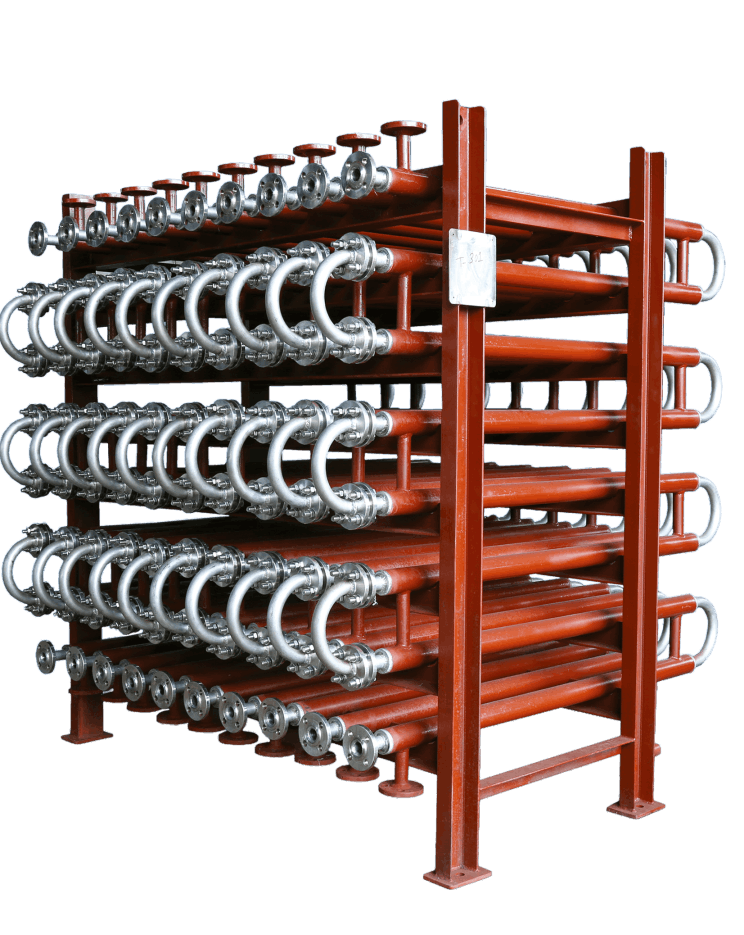
Flow Reactor (HFR)
Reactor (TFR)
Reactor (PFR)
| Flow Regime | Segmented, alternating high/low shear zones; partial plug flow | Very thin laminar film, continuous renewal | Ideal plug flow (no axial mixing) |
|---|---|---|---|
| Mixing | Enhanced at pinch points; good overall mixing | Extremely high due to surface renewal | Minimal axial mixing; radial mixing only |
| Mass Transfer | High; enhanced by shear and surface renewal; supports multiphase | Excellent, especially at surface | Moderate; depends on tube diameter and flow type |
| Residence Time Distribution | Narrower than CSTR but broader than ideal PFR; closer to plug flow but with some dispersion | Very narrow, determined by film thickness and flow rate | Dirac delta function for ideal case; very narrow |
| Pressure Drop | Moderate to high due to repeated constrictions | Low; depends on film characteristics | Relatively low unless high velocity or very long tubes |
| Heat Transfer | Improved by alternating constriction and mixing zones | Excellent, due to high surface-area-to-volume ratio | Good, especially in small-diameter tubes |
| Best For | Rapid mixing, exothermic/multiphase, extraction, high mass transfer | Heat-sensitive, viscous, rapid or surface-driven reactions | Fast, single-phase reactions, polymerizations, large-scale chemical synthesis |
Flow Reactor (HFR)
| Flow Regime | Segmented, alternating high/low shear zones; partial plug flow |
|---|---|
| Mixing | Enhanced at pinch points; good overall mixing |
| Mass Transfer | High; enhanced by shear and surface renewal; supports multiphase |
| Residence Time Distribution | Narrower than CSTR but broader than ideal PFR; closer to plug flow but with some dispersion |
| Pressure Drop | Moderate to high due to repeated constrictions |
| Heat Transfer | Improved by alternating constriction and mixing zones |
| Best For | Rapid mixing, exothermic/multiphase, extraction, high mass transfer |
Reactor (TFR)
| Flow Regime | Very thin laminar film, continuous renewal |
|---|---|
| Mixing | Extremely high due to surface renewal |
| Mass Transfer | Excellent, especially at surface |
| Residence Time Distribution | Very narrow, determined by film thickness and flow rate |
| Pressure Drop | Low; depends on film characteristics |
| Heat Transfer | Excellent, due to high surface-area-to-volume ratio |
| Best For | Heat-sensitive, viscous, rapid or surface-driven reactions |
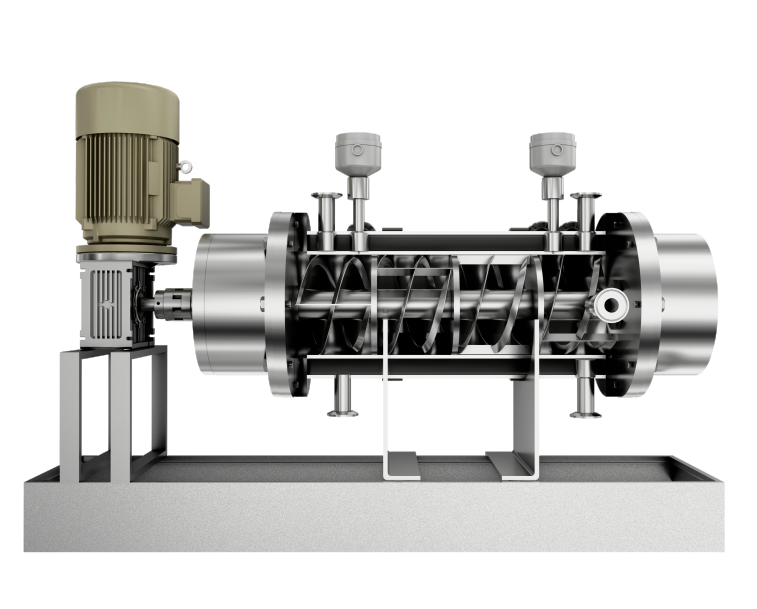
Reactor (PFR)
| Flow Regime | Ideal plug flow (no axial mixing) |
|---|---|
| Mixing | Minimal axial mixing; radial mixing only |
| Mass Transfer | Moderate; depends on tube diameter and flow type |
| Residence Time Distribution | Dirac delta function for ideal case; very narrow |
| Pressure Drop | Relatively low unless high velocity or very long tubes |
| Heat Transfer | Good, especially in small-diameter tubes |
| Best For | Fast, single-phase reactions, polymerizations, large-scale chemical synthesis |
Key Distinctions
Hydrodynamic Flow Reactor (HFR)
Plug Flow Reactor (PFR)
Advantages: Provides predictable conversion and selectivity with narrow residence time; scalable, efficient for uniform reactions.
Thin Film Reactor (TFR)
Flow Reactor Application Summary
Hydrodynamic Flow Reactor (HFR)
Heterogeneous extractions, two-phase and fast exothermic reactions, high mass transfer scenarios.
Plug Flow Reactor (PFR)
Bulk chemicals, polymerization, continuous gas/liquid-phase synthesis where minimal mixing suffices.
Thin Film Reactor (TFR)
Polymers, pharmaceuticals, distillation, reactions needing rapid heat removal or low residence time dispersion.
Each reactor design addresses the balance among mixing, mass transfer, and residence-time control in a different way to meet specific chemical engineering needs.
Partnering with Metal Plants India Pvt. Ltd. means gaining a trusted engineering ally for your continuous flow chemistry journey. If you need a Hydrodynamic Flow Reactor (HFR) for vigorous mixing, a Plug Flow Reactor (PFR) for consistent and high-volume production, or a Thin Film Reactor (TFR) for products that are sensitive to heat or very thick, our team can create, build, and fit the right solution for your needs. Backed by over five decades of fabrication expertise, ISO 9001:2015-certified quality systems, and a profound understanding of demanding chemical, pharmaceutical, and allied applications, we deliver reactors that are safe, efficient, and scalable from pilot to full production.
If you’re exploring continuous processing, upgrading from batch, or optimizing an existing line, talk to us about a customized flow reactor engineered around your chemistry, throughput, and safety requirements. Contact Metal Plants today to discuss your application, request a technical consultation, or download our detailed reactor brochures – and let us help you convert process challenges into long-term performance advantages.
Case Study: Flow Reactor – TFR / PFR / HFR for Continuous Chemical Processing
Industrial Solution for Continuous, High-Efficiency Reaction Systems with Controlled Residence Time and Enhanced Process Performance
Project Overview
A multinational specialty chemical and fine chemical manufacturer required a modern reactor platform capable of continuous chemical processing with precise control of reaction time, temperature, and flow dynamics. Existing batch reactors and semi-continuous units limited throughput, reproducibility, and process intensification. To enhance product quality, reduce cycle times, and support scalable, continuous operation, an engineered suite of flow reactors—including TFR (Tubular Flow Reactors), PFR (Plug Flow Reactors), and HFR (Helical Flow Reactors)—was specified and implemented.
Flow reactors are designed to conduct chemical transformations while reactants continuously flow through the system, enabling high conversion efficiency, space–time control, and effective integration with downstream operations.
Client Profile
- Industry: Specialty Chemicals, Pharmaceuticals, Petrochemicals, Fine Chemicals
- Process Type: Continuous flow reactions for synthesis, catalytic conversions, and polymerization
- Materials Handled: Liquids, gases, slurries, reactive intermediates
- Operational Goals: High throughput, reduced residence time variation, tight process control
Challenges Faced:
Before installing the Flow Reactor solution, the client’s production was constrained by:
- Batch-level variability in product quality and reproducibility
- Limited scalability for continuous processing
- Inefficient heat and mass transfer at larger batch scales
- High operating costs due to long batch cycles and downtime
- Difficulty in controlling residence time distribution, critical for selectivity and conversion.
These limitations posed risks to competitive throughput, energy efficiency, and process robustness, particularly for complex multi-step reactions.
Engineered Solution: Flow Reactor System (TFR / PFR / HFR)
1. Tubular Flow Reactor (TFR)
A continuous reactor where reactants flow through a hollow tube or series of pipes. Ideal for steady-state reactions with minimal back-mixing, TFRs provide reproducible residence time distribution and scalable operation suitable for long reaction paths. They can incorporate heat transfer jackets, packed beds, or static mixing elements as required.
2. Plug Flow Reactor (PFR)
The PFR is a specialized tubular reactor where fluid elements move as discrete “plugs” with uniform composition across each cross-section and negligible axial mixing. This ideal flow profile ensures predictable conversion along the reactor length, making PFRs highly effective for continuous production and reactions with well-defined kinetics.
3. Helical Flow Reactor (HFR)
HFRs introduce helical or spiral flow paths inside tubular reactors to enhance mixing and control residence time, improving heat and mass transfer compared with straight tubes. They are especially effective in processing high-viscosity fluids or multiphase systems where uniform flow profiles and reduced axial dispersion are desired.
All reactors were engineered with appropriate materials of construction (such as stainless steel to nickel alloys like Haste alloy C22 & C276 etc.), custom heat transfer jackets, and integrated instrumentation for temperature, pressure, and flow control.
System Highlights
- Continuous Reaction Flow: Reactants are fed in a steady stream while products are taken out at the same time, allowing for steady-state operation.
- Controlled Residence Time: Reactor geometries selected to deliver a tight residence time distribution for consistent conversion and selectivity.
- Enhanced Heat & Mass Transfer: Helical and tubular designs tailored to optimize thermal response and reduce hot spots.
- Modular Integration: Reactors engineered for plug-and-play integration with feed/preheat systems, catalysts, and downstream separation units.
- Advanced Process Control: PLC/SCADA systems provide real-time monitoring and automated safety controls.
Applicable Industries
This Flow Reactor solution is designed for a wide range of process-driven sectors, including:
Food and Beverage Processing
Pharmaceutical Production
Chemical and Specialty Chemical Manufacturing
Cosmetics and Personal Care Formulations
Dairy and Brewery Operations
Each reactor system can be engineered to meet strict industry-specific standards for hygiene, safety, and regulatory compliance.
By integrating an automated flow reactor system, clients gain precise control over reaction conditions, uniform product quality, and highly scalable throughput. Transitioning from traditional batch methods to a continuous, intelligently controlled reactor enhances process consistency, reduces operational variability, and strengthens overall production reliability. This case demonstrates how a purpose-built flow reactor becomes a key strategic asset for modern manufacturing environments that demand performance, efficiency, and robust process outcomes.
Talk To Our Flow Reactors System Expert
Contact our engineering team today to discuss your application, capacity requirements, and automation goals.
Frequently Asked Questions About Flow Reactor: TFR/PFR/HFR
What is a flow reactor, and how does it work?
What are the main types of flow reactors (TFR, PFR, HFR) and how do they differ?
How do you choose between TFR, PFR, and HFR for a specific process?
What applications are flow reactors used for in chemical and pharmaceutical plants?
Flow reactors are versatile and can handle a wide range of applications. In chemical plants, they’re used for polymerization, chemical synthesis, and fine chemical production. In pharmaceutical manufacturing, they enable precise, continuous drug formulation, reducing batch variability and enhancing quality. They are also excellent for heat-sensitive reactions, multiphase systems, and fast chemical processes. At Metal Plants India Pvt. Ltd., we design reactors that optimize your throughput while maintaining consistent product quality. We can help you integrate continuous flow systems into existing production lines, reduce downtime, and improve safety, making your operations more efficient and cost-effective.